
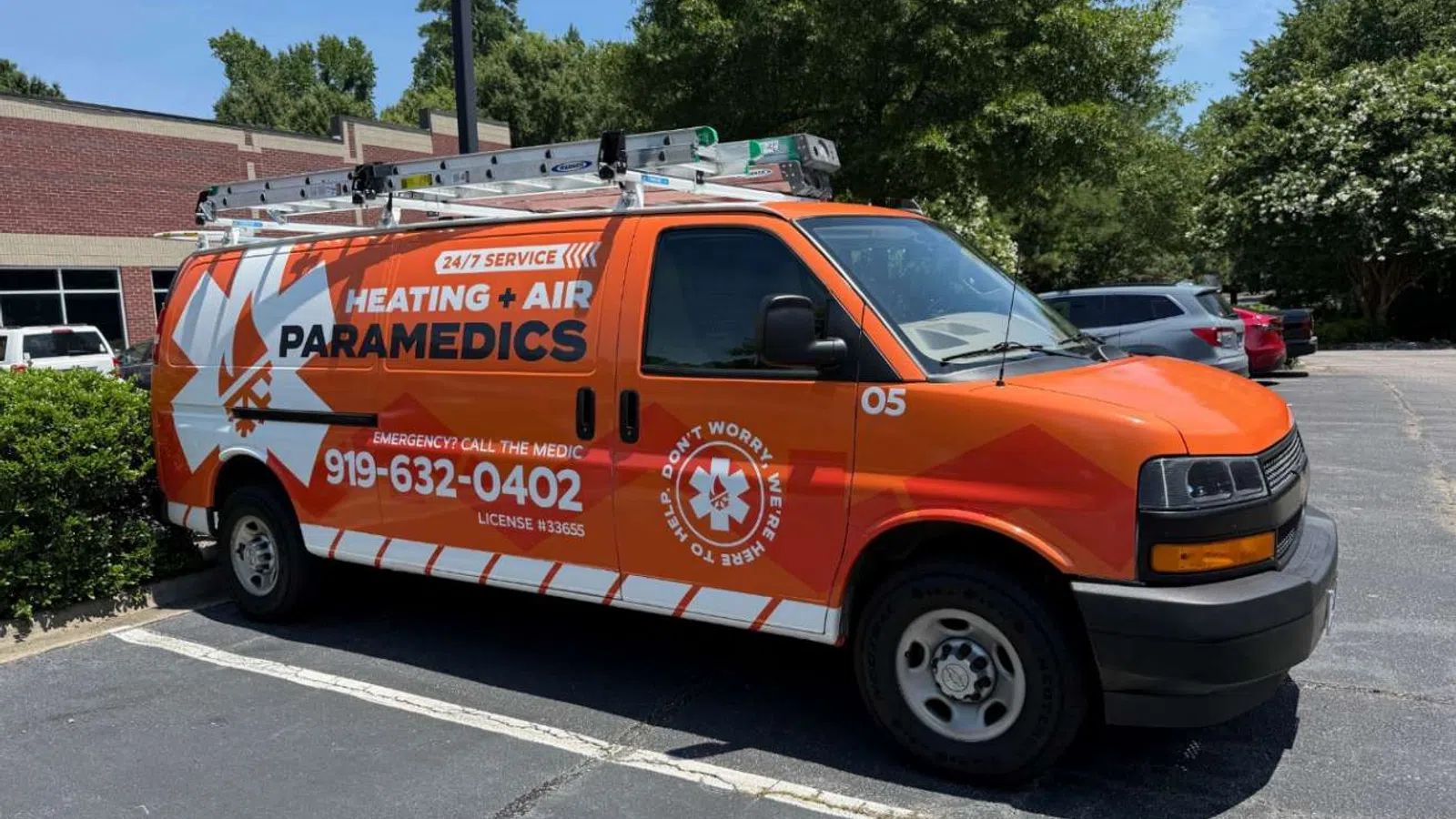
Furnace Blowing Cold Air Instead of Heat? Here's Why
It's the middle of a chilly Raleigh evening, you crank up the thermostat, and instead of that familiar warm rush from the vents, you get a blast of cold air. Maybe it's a fluke. Maybe it's not. Either way, a furnace blowing cold air instead of heat is one of the most common (and most stressful) heating complaints homeowners across Wake County run into once temperatures drop.
The good news: this problem almost always has an identifiable cause, and many of the reasons your furnace is blowing cold air are easy to diagnose once you know what to look for.
Below, we'll walk through each of these causes in detail, explain when cold air is actually normal, and cover what to do if the problem doesn't resolve on its own.
Is It Normal for a Furnace to Blow Cold Air at First?
Before assuming something's broken, it helps to know what's normal. When a furnace starts a heating cycle, there's usually a short delay (often 30 to 90 seconds) between when the blower turns on and when the burners have warmed the heat exchanger enough to produce hot air. During that window, you may feel cool or lukewarm air coming from the vents.
This is especially noticeable the first time you run your furnace after months of sitting idle, since the ductwork itself has to purge out cold air before warm air can take over. If the air warms up within a few minutes and stays warm for the rest of the cycle, your system is working as designed.
The problem is worth investigating when:
- Cold air continues for more than a few minutes
- The blower runs constantly but never produces heat
- You notice the issue repeatedly over several heating cycles
When Cold Air Signals a Bigger Problem
Occasional cold air during startup is nothing to worry about. But if you're also noticing any of the following, it's a sign of a more serious issue:
- A burning or metallic smell coming from vents
- Frequent short cycling (turning on and off repeatedly)
- Rising energy bills without a clear explanation
- Uneven heating from room to room
- Strange banging, rattling, or whistling noises
These symptoms often point to problems that go beyond a simple filter change or thermostat adjustment, and they're worth having evaluated before they turn into a full system failure on a freezing night.
How to Troubleshoot a Furnace Blowing Cold Air
Before calling for service, it's worth running through a few basic checks:
- Confirm the thermostat mode is set to "Heat" and the fan is set to "Auto."
- Check the temperature setting and raise it a few degrees above the current room temperature to trigger a heating cycle.
- Inspect the air filter and replace it if it looks gray, matted, or clogged.
- Check the circuit breaker for the furnace to rule out a tripped switch.
- Listen for ignition attempts. Repeated clicking with no flame usually points to an ignition or gas supply issue that needs a technician.
- Give it time. If this is the first heating cycle of the season, allow 10-15 minutes before assuming something's wrong.
If you've worked through this list and the furnace is still blowing cold air or if you're uncomfortable inspecting gas components yourself it's time to bring in a professional rather than risk a safety issue.
When to Call a Professional for Furnace Repair
Some causes of cold air are simple homeowner fixes. Others, particularly anything involving gas valves, ignition systems, flame sensors, or heat exchangers require a licensed technician to diagnose and repair safely. Our team handles furnace repair in Raleigh, NC year-round, and cold air complaints are consistently one of the top reasons homeowners in Wake County, Durham, and Clayton reach out during the heating season. In our experience, a thorough diagnostic almost always traces the issue back to one of the causes above, which means most repairs can be completed the same day.
If you're also dealing with a furnace that won't turn on at all, our guide on why your furnace isn't working breaks down additional troubleshooting steps. And if a technician determines your ductwork is leaking or your home's overall air distribution is uneven, our indoor air quality services and duct evaluations can help track down where warm air is being lost.
Frequently Asked Questions
Q Why does my furnace run but only blow cold air?
This typically means the blower is operating, but the burners aren't igniting or the heat isn't reaching the air before it's pushed through the ducts. The most common causes are a thermostat fan setting stuck on "On," an ignition failure, or a dirty flame sensor.
Q Is it dangerous if my furnace blows cold air?
Not usually by itself; cold air is often a safety mechanism kicking in, such as a limit switch shutting off the burners to prevent overheating. However, if you smell gas, notice soot, or hear repeated clicking without ignition, turn the system off and contact a professional right away.
Q Can I fix a furnace blowing cold air myself?
Some causes are safe for homeowners to check and fix. Anything involving gas components, wiring, or the heat exchanger should be handled by a licensed HVAC technician to avoid safety risks.
Q How long should a furnace blow cold air before it warms up?
A brief delay of 30 to 90 seconds at the start of a heating cycle is normal. If cold air continues for several minutes or doesn't improve across multiple cycles, there's likely an underlying issue.
Don't Wait Out a Cold House: Call Heating + Air Paramedics
A furnace blowing cold air instead of heat is rarely something that fixes itself, and putting it off usually means a colder home and a bigger repair bill down the road. Our licensed technicians provide fast, honest furnace repair throughout Raleigh, NC, and surrounding communities like Wake Forest, Cary, Garner, and Clayton - with upfront pricing and no pressure to buy more than you need.
If your furnace is blowing cold air, making strange noises, or just isn't keeping up, call Heating + Air Paramedics at 919-295-9675 or request service online today. We're available around the clock, because a cold house at 2 a.m. can't wait until Monday.


