
Heat Pump Running Nonstop but the House Is Still Cold? Here's What's Going On
It's a cold January night. You can hear the outdoor unit humming, air is moving through the vents, and the thermostat says the system is heating. Yet the house is stuck at 64 degrees when you set it for 70, and it has been that way for hours. Your heat pump is clearly working hard, so why isn't your home getting any warmer?
A heat pump that runs constantly without warming the house usually has something limiting how much heat it can deliver. Sometimes that's a simple setting or a clogged filter. Other times it points to a refrigerant leak, a frozen coil, or a failing part that needs professional attention.
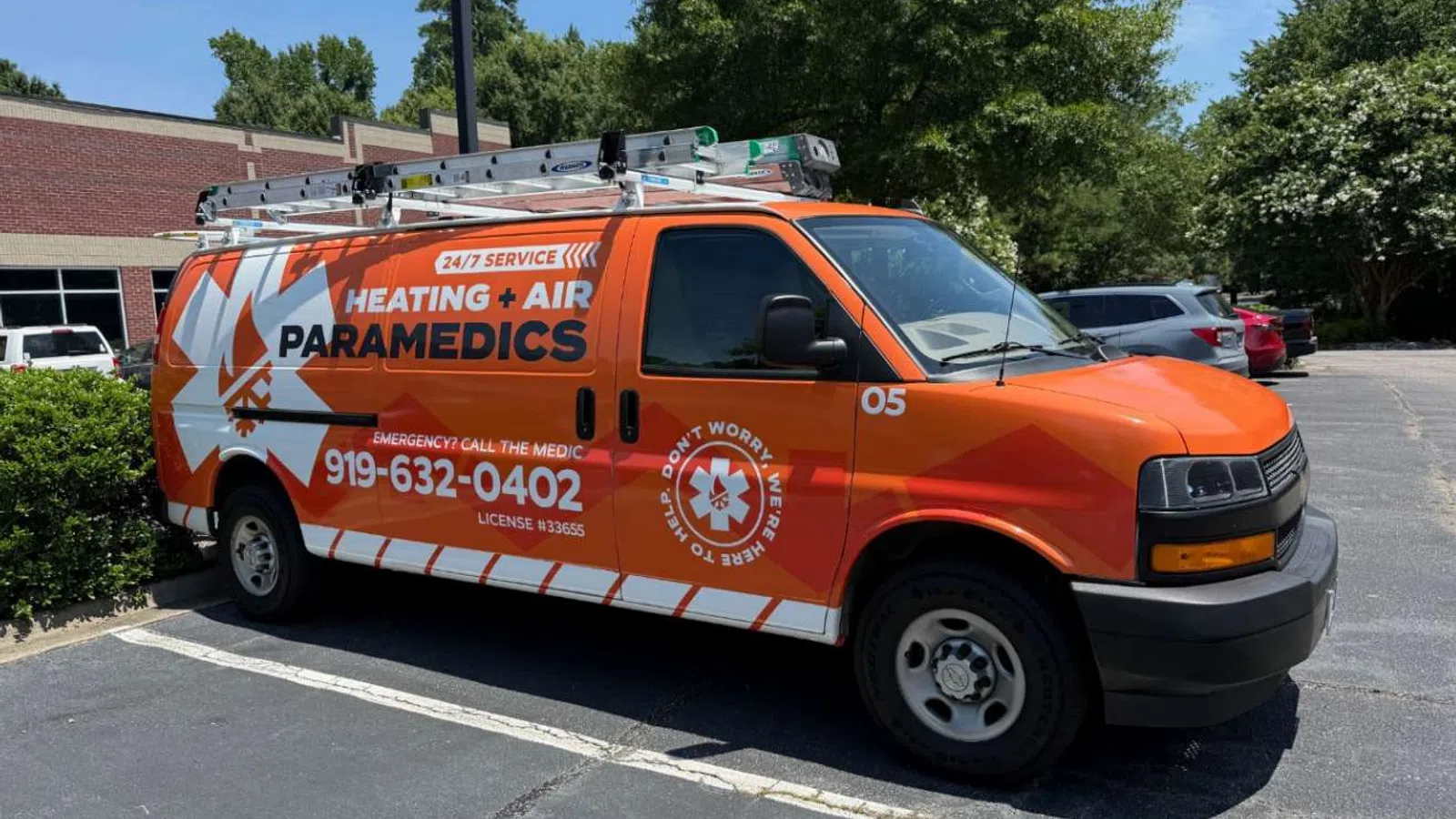
At Heating + Air Paramedics, we help homeowners across Raleigh, NC track down exactly this kind of problem. Here's when long run times are normal, what causes them when they aren't, and what you can check yourself.
Is It Normal for a Heat Pump to Run Constantly in Winter?
Sometimes, yes. A heat pump doesn't create heat the way a gas furnace does. It pulls heat from the outdoor air and moves it inside, which means it delivers a steady, gentler warmth rather than short blasts of hot air. Air from a heat pump typically feels warm, not hot, and the system is designed to run longer cycles to keep up.
As outdoor temperatures drop, there's less heat to collect, so the system naturally runs longer. Variable-speed models are also built to run for long periods at low speed.
Signs of Normal Heat Pump Operation
- Long run times during the coldest nights and early mornings
- The house holds the temperature you set, even if the system rarely shuts off
- Brief bursts of steam from the outdoor unit while it runs a defrost cycle
Signs Your Heat Pump Is Struggling
- It runs all day even when outdoor temperatures are mild, such as in the 40s or 50s
- The house never reaches the thermostat setting
- Air from the vents feels cool or close to room temperature
- The outdoor unit is covered in ice that doesn't clear on its own
- Your electric bill is noticeably higher than usual for the season
If your system fits the second list, one of the causes below is likely behind it.
What to Check Before Calling a Technician
A few quick, safe checks can rule out the simple causes:
- Confirm the thermostat is set to Heat, the setpoint is correct, and the fan is on Auto. Replace the batteries if it uses them.
- Replace the air filter if it looks gray or clogged.
- Open all supply vents and clear furniture, rugs, and curtains away from vents and return grilles.
- Clear leaves, mulch, and debris from around the outdoor unit. Do not chip at ice with tools, since that can damage the coil fins.
- Check your electrical panel for tripped breakers on the outdoor unit or air handler. If a breaker trips again after one reset, leave it off and call for service.
If the house still won't warm up after these steps, the cause is likely something that needs professional tools and training.
When to Schedule Professional Heat Pump Repair
Most of the problems above, including refrigerant leaks, defrost control failures, faulty heat strips, and a stuck reversing valve, can't be solved with a filter change. Our technicians provide expert heat pump repair in Raleigh, NC for all makes and models, and we offer same-day appointments because a cold house can't wait for next week. A technician can test refrigerant pressures, defrost controls, capacitors and relays, airflow, and backup heat to pinpoint why your system can't keep up.
If your home uses a dual-fuel setup with a gas furnace as backup, the issue may be on the furnace side instead. Our team also handles furnace repair, so we can diagnose the whole system in one visit.
Call right away if you notice ice that won't clear, breakers that keep tripping, burning smells, or grinding noises. We offer 24/7 emergency service, so you don't have to wait out a cold night.
How to Keep Your Heat Pump From Running Nonstop
- Change filters regularly, checking them monthly during heavy use
- Keep at least a couple of feet of clearance around the outdoor unit
- Avoid large thermostat setbacks; small, steady adjustments work better with heat pumps
- Schedule tune-ups before the heating and cooling seasons through one of our HVAC maintenance plans
Frequently Asked Questions
Q Why is my heat pump running but the house is still cold?
The most common causes are incorrect thermostat settings, a dirty filter, a frozen outdoor coil, low refrigerant, or backup heat that isn't engaging. If basic checks don't help, a technician should inspect the system.
Q How long should a heat pump run in cold weather?
There's no fixed number. On very cold days, running nearly nonstop can be normal as long as the house holds the set temperature. Constant running in mild weather, or a house that never warms up, signals a problem.
Q Should I switch my heat pump to emergency heat?
Emergency heat runs only the backup electric heat and bypasses the heat pump. It can keep you warm temporarily if the outdoor unit fails, but it's expensive to run, so use it short term and schedule a repair.
Q Does a heat pump running nonstop increase my electric bill?
It can, especially when the system leans on backup heat strips to make up for a problem. Fixing the underlying issue usually brings bills back to normal.
Get Your Raleigh Home Warm Again
A heat pump that runs all day while your home stays cold is costing you comfort and money. Whether the cause is an airflow issue or a failing component, Heating + Air Paramedics will find it and give you a straight answer with upfront pricing before any work begins.
We serve homeowners throughout Raleigh, Wake County, Durham, and Clayton. Call us at 919-295-9675 or request service online to schedule your heat pump repair today.


